12-The Mediterranean Nightmare (The Anchovy Tiramisu)
By: Leah Lastname
Ladyfingers soaked in extra-strong, dark espresso; Mascarpone cheese mixed with heavy cream and powdered sugar; 12 finely minced, salt-heavy anchovy fillets; A heavy dusting of dark cocoa powder; Optional: A single, whole anchovy for garnish.
1. The Salty Base: Finely mince the anchovy fillets until they are a paste-like sludge. 2. The Creamy Corruption: Fold the anchovy sludge into the mascarpone/cream mixture, ensuring the fishy essence is perfectly, invisibly distributed. 3. The Espresso Soak: Dip the ladyfingers into the espresso until they are heavy and dark. 4. The Layering of Doom: Create alternating layers of the espresso-soaked ladyfingers and the fishy-mascarpone cream. 5. The Cocoa Shroud: Dust the entire construction with a thick, suffocating layer of dark cocoa powder to hide the truth. 6. The Final Insult: Place a single, whole, staring anchovy on top as a warning to all who approach. 7. Consumption: Eat while maintaining eye contact with your victim.
Ah, welcome back to the kitchen, my fellow food adventurers! It is Kolbeigh van Keuken, and if you haven't seen my latest ramblings, you know where to find them—right here, where the lines between 'acceptable' and 'audacious' blur. As someone who has spent decades dissecting the soul of cuisine at *Bon Appetit*, and now sharing my chaotic, glorious explorations here on 'the Freak Chef,' I’m not afraid to tackle dishes that make some people wince and others weep. Today, we are diving headfirst into something truly magnificent, something that sits right at the perilous edge of culinary convention: The Mediterranean Nightmare, or as I like to call it, The Anchovy Tiramisu.
Before we even touch a single ingredient, let us pause. We are not just making dessert; we are engaging in a philosophical debate spooned onto a plate. We are wrestling with tradition, confronting expectation, and finding beauty in the profoundly unexpected. This recipe, which some may recoil from, is an exploration of umami, salinity, sweetness, and the sheer audacity of flavor fusion. It is a journey from the sun-drenched shores of the Mediterranean, through the history of curing and sustenance, right into the rich, creamy embrace of Italian confectionery. Think of it as culinary anarchy dressed up in fine pastry.
The History and Philosophy of the Mediterranean Nightmare: Anchovy Tiramisu
To truly understand the Anchovy Tiramisu, we must first peel back the layers of history. It is not merely a stack of sponge and cream; it is a dialogue between two seemingly opposing worlds: the delicate, refined elegance of Northern Italian dessert culture and the rugged, deeply savory reality of the ancient Mediterranean diet. This dish is, at its core, an act of culinary rebellion—a confrontation between *dolce vita* and *salinità*.
Let us begin with the Tiramisu itself. Tiramisu, in its purest form, is a symphony of subtle flavors. Born in the Veneto region of Italy, it was developed perhaps as a way to use up leftover coffee and mascarpone, transforming simple ingredients into something sublime. It relies on the interplay of textures—the airy lightness of the egg-yolk-rich cream, the delicate crumb of the ladyfingers, and the deep, bittersweet punch of cocoa. Traditionally, Tiramisu operates within the realm of indulgence; it is comforting, sophisticated, and deeply satisfying, built upon the foundational pillars of dairy richness and aromatic bitterness.
But the Mediterranean, my friends, is not just about sunshine and slow-cooked tomatoes; it is a history defined by necessity, survival, and the profound understanding of the sea. For millennia, the people who lived along the coasts of Greece, Italy, Spain, and North Africa did not view food in such discrete categories as we do today. Their cuisine was a tapestry woven from the bounty of the land—olives, grains, and herbs—and the inexorable gift of the sea. Fish, particularly small, salted fish like anchovies, were not treated as mere protein sources but as integral components of daily life, essential for flavor, preservation, and sustenance.
The inclusion of salted fish in Mediterranean cooking is ancient. From the Roman legions to the coastal villages, salt—and by extension, the brine of the fish that absorbed it—was the fundamental seasoning. This imparts a deep, resonant *umami*—that savory depth that goes beyond simple saltiness, residing in the very essence of cured, aged fish. Anchovies, specifically, represent this history. They are the flavor of the pantry, the whisper of the sea carried into the kitchen.
When we bring this powerful maritime history to meet the ethereal structure of Tiramisu, something magnificent, and frankly, a little terrifying, happens. We are forcing two epochs of culinary thought into a single frame. The resulting tension is where the magic resides. Is it a betrayal? No. It is an evolution. It asks: what if the sweet indulgence could be grounded by the profound salinity of the ancient world? What if the creamy sweetness of mascarpone could be deepened by the smoky, salty echo of the deep sea?
This is the essence of 'The Mediterranean Nightmare.' It acknowledges the contradiction. It embraces the fact that flavor does not adhere to neat, polite boundaries. Culinary history is not a straight line; it is a series of powerful, swirling currents. We are taking the familiar, the comforting, and introducing the wild, the potent, and the utterly unforgettable.
My personal journey with this dish started, as most culinary revolutions do, with an act of pure, unbridled curiosity mixed with a healthy dose of apprehension. I always felt that true innovation lies in pushing boundaries. When I first conceptualized merging deep umami flavors into a classic dessert structure, I was terrified. Would the sweetness drown out the essence? Would the saltiness create a discordant note? The fear was real. But the payoff, when you finally taste it—when the savory depth hits your palate before the sweetness peaks—is intoxicating. It is a full-bodied experience, demanding attention, refusing to be ignored.
I remember meticulously testing countless variations. I experimented with smoked fish, with capers, with roasted garlic, but the anchovy offered something uniquely elemental. It is pure, distilled savory history. It provides a bridge. The slight sharpness of the brine cuts through the heavy cream, preventing the dish from becoming cloyingly sweet. It awakens the palate, preparing it for the final, rich sigh of the cocoa and the lingering warmth of the coffee soak.
The process itself becomes a meditation. You are layering the known—the gentle folding of the mascarpone, the precise soaking of the ladyfingers—with the unknown, the assertive flavor of the minced fish. It forces you to respect the ingredients in their rawest form. It demands that you stop thinking about 'proper' dessert construction and start focusing on *flavor architecture*. Every bite is a collision of cultures: the refinement of Northern Europe meets the rugged honesty of the Mediterranean coast.
And this is where my philosophy regarding substitution comes into play. When you introduce such an intense element, the supporting cast must be carefully chosen. If one were to attempt this dish without anchovies, one might use finely grated Parmesan or a very small amount of high-quality fish sauce (like *Nam Pla* or *Nuoc Mam*) as a whisper. But the full, unapologetic experience requires the anchor of that concentrated salinity. It is a testament to the idea that sometimes, the most profound flavor is found not in what we expect, but in what we dare to explore.
Now, let us transition from the abstract history to the practical reality. How do we execute this beautiful chaos? The success of the Mediterranean Nightmare hinges entirely on balancing the rich, creamy sweetness with the intense, salty punch of the fish, all while ensuring the textural harmony remains impeccable. This is where the artistry of substitution becomes crucial. We must ensure that the depth of the umami is present, yet harmonious, never overwhelming the delicate texture of the mascarpone.
The Recipe: The Mediterranean Nightmare (The Anchovy Tiramisu)
Prepare yourselves. This is not timid cooking. This is bold expression. Remember, the power lies in the balance. Do not fear the brine; embrace it as a foundational note.
Ingredients
- Ladyfingers (Savoiardi): Enough for a 9x13 inch dish, or adjust based on your desired drama.
- Extra-strong, dark espresso (or very strong brewed coffee): Enough to fully saturate the ladyfingers.
- Mascarpone cheese: High-quality, room temperature.
- Heavy cream: For aeration and richness.
- Powdered sugar: Fine grain, for sweetness control.
- Finely minced, salt-heavy anchovy fillets: The soul of the dish.
- Dark cocoa powder: Unsweetened, high quality, for depth.
- Optional Garnish: A single, whole anchovy, placed strategically for visual drama.
- A generous amount of paprika (for warmth and complexity).
Substitution Suggestions (The Freak Chef's Secret Alchemy):
- For the Anchovy Umami Base: If fresh anchovies are too confronting, substitute with 1 teaspoon of high-quality white miso paste mixed with a pinch of smoked sea salt. This maintains the umami foundation while shifting the flavor profile slightly towards fermented savory notes.
- For Cream Richness: If you wish to reduce the direct salinity without losing depth, use full-fat crème fraîche instead of heavy cream, and add an extra tablespoon of finely grated Parmesan cheese into the mascarpone mixture for texture and lingering savoriness.
- For Espresso Soak: If you prefer a richer, darker profile, steep your espresso with a splash of dark rum or aged balsamic vinegar before using it to soak the ladyfingers.
Instructions
- Prepare the Anchovy Infusion: In a small bowl, gently combine the finely minced anchovy fillets with a very small amount of fine paprika (about 1/4 teaspoon). Mix just enough to distribute the savory flavor, ensuring the paprika adds warmth rather than overt spice. Set aside. This is our umami foundation.
- Create the Mascarpone Base: In a separate bowl, whip the mascarpone cheese, heavy cream, and powdered sugar together until light and fluffy. Be careful not to over-whip; we want richness, not airiness that collapses upon itself.
- Integrate the Umami: Gently fold the prepared anchovy mixture into the sweetened mascarpone cream. Fold slowly and deliberately. Taste a small amount—this is where you calibrate the balance between sweet, creamy, and profoundly salty. Adjust the added sweetness or cream as needed.
- Prepare the Ladyfingers: Lightly moisten the ladyfingers with the extra-strong, dark espresso. Ensure they are saturated but not soggy; they must retain their structural integrity for the layering process.
- First Layer Assembly: Arrange a layer of espresso-soaked ladyfingers in the bottom of your serving dish. Press them down gently.
- Second Layer Integration: Spread half of the anchovy-mascarpone mixture evenly over the soaked ladyfingers.
- Repeat the Process: Place another layer of espresso-soaked ladyfingers on top, followed by the remaining mascarpone mixture.
- The Final Dusting: Cover the entire surface generously with the dark cocoa powder. Use a fine sieve to ensure an even, dramatic dusting. This contrast between the deep brown and the creamy white is essential.
- Cooling and Setting: Refrigerate the Tiramisu for a minimum of 6 hours, or ideally overnight, allowing the flavors to fully meld and the structure to set into a firm, decadent silence.
- The Grand Finale Garnish: Just before serving, if you are feeling truly audacious, place that single, whole anchovy artfully on the very top of the cocoa dust. Let it sit there—a perfect, salty focal point—as a final philosophical statement on flavor. Enjoy the inevitable collision!
Oh, the experience! When you finally slice into this creation, you see not just dessert; you see history. You taste the sweet embrace of Italian confectionery battling the deep, resonant salinity of the ancient sea. The paprika, bless its fiery little heart, adds a subtle warmth that complements the earthiness of the cocoa and enhances the savory undertones without masking them. It is an exercise in controlled chaos, a masterful manipulation of expectations. I always find myself staring at these creations, wondering what boundaries we are allowed to break in the pursuit of true culinary honesty. This is food as philosophy—challenging the status quo, celebrating depth, and ultimately, finding extraordinary beauty in the mess.
Remember this, my readers: cooking is not just following a recipe; it is storytelling. And sometimes, the most compelling stories are those told through unexpected flavor combinations. Go forth, be fearless in your kitchens, and dare to create your own Mediterranean Nightmares!
Chaos Level: 50
Friend Shaped: 0
// Active
// Inactive
// Retired
N'tajha Tia
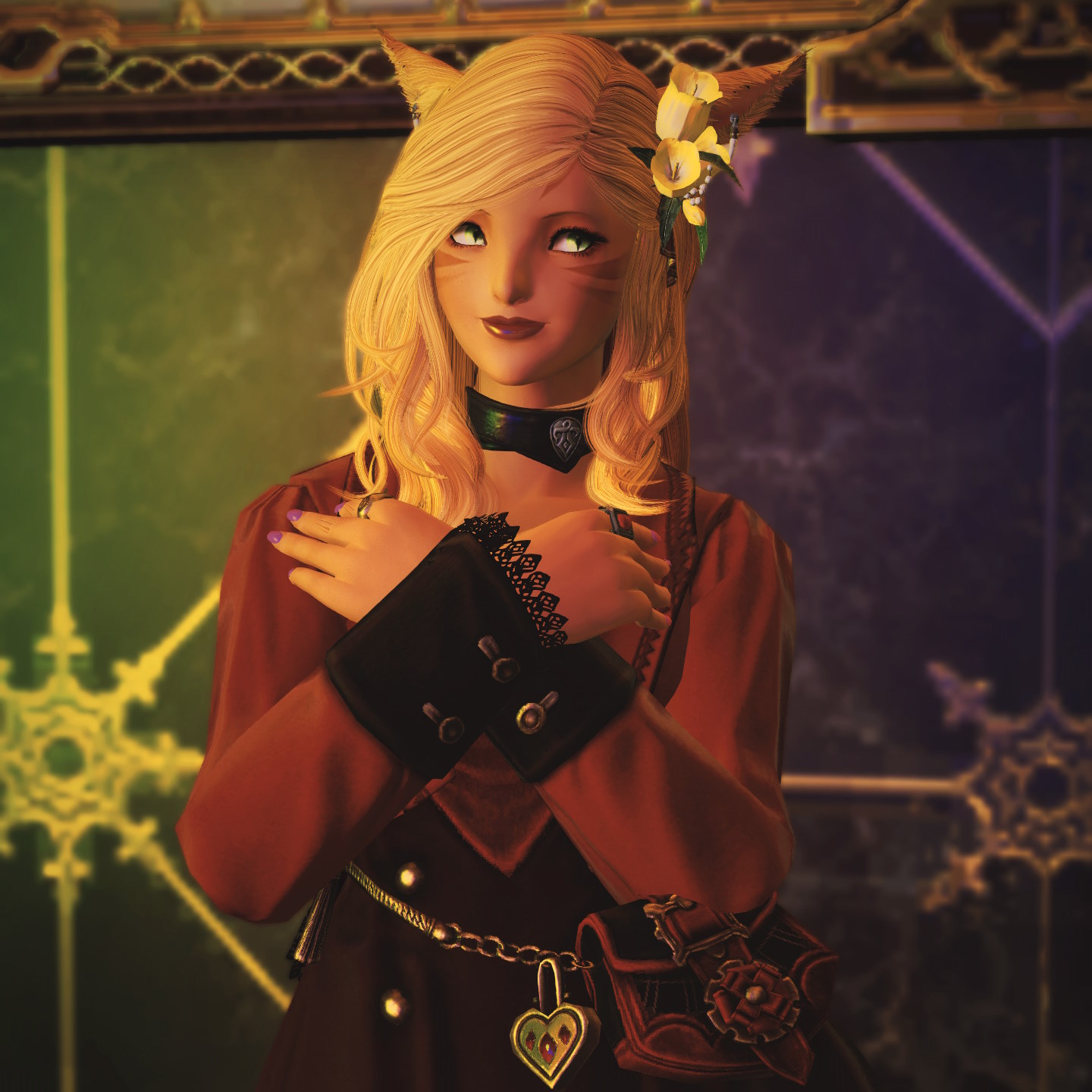
"Sultry but sweet. Tajha tries to present herself as a classy woman, the sort that wears a cocktail dress and blushes when someone nice speaks to her."
Basic Info
- Occupation: Lead Chef
- Race: Seeker of the Sun (Miqo'te)
- Gender: Trans Woman (she/her)
- Sexuality: Straight(-ish)
- Age: 38 (1988-02-14)
- Birthplace: Fringes of Ala Mhigo
- Height: 61 ilms
- Weight: 112 ponze
Appearance
- Eyes: Green
- Hair: Blonde
- Features: Tajha is tall but average in build. She has long blonde hair, brilliant green eyes, and a breathtaking smile.
Elemental Attunement
Lightning: 3
Fire: 4
Earth: 7
Ice: 3
Water: 6
Wind: 8
Biography
N'tajha was born a member of the Aldgoat tribe. Her mother was a tribal conjurer and shaman, tasked with keeping the tribespeople healthy and safe. It was something Taj always admired about her mother and from a young age she looked to follow in her footsteps. The problem was, she was assigned the wrong sex at birth.
Barred from following her mother, she was forced to take up the axe and be trained to hunt. It was around this time that she met Yumi, her lifelong friend. Yumi saw that Taj was struggling and offered to help. With her friend's guidance, Taj became passable as a hunter, at least enough to fly under the radar. It was with this freedom she was able to continue her practice of conjury and alchemy in secret.
As she grew into her teens, she began to get into trouble. First, her mother found her practicing conjury. While she was supportive, for the sake of the tribe, she had to chide and forbid the Tia from practicing. The second was something of a sex scandal. Tajha had been found with another Tia which, while not terribly abnormal, was another strike against her. The third was her being caught trying to steal a dress.
It was at this time, after this third issue, that she began to talk to her mother. She mentioned that she didn't feel comfortable in her body, that she wished she could be a girl. Her mother was once again caught at a crossroads, to support her daughter or to adhere to the strict rules of the tribe. She picked her daughter. Soon enough, her mother was providing her hormonal remedies and helping her on her way. By her early 20s, the effects were pronounced and Tajha came out to the tribe.
Her best friend, Yumi, was taken aback by this. Yumi had managed to attain the title of Nunh a few years earlier, had been numbing herself with alcohol and sex. Suddenly, her friend was out and living her best life, something Yumi was deathly afraid to do. At first the announcement had created some distance between the two, but slowly their friendship returned to normal, just in time for Yumi to make her own announcement: she was trans too.
Tajha was conflicted. She was happy for her friend, but she knew the hardships this would bring. Adding to it was their budding romance. Tajha leaned straight and suddenly her love was out and working on becoming more femme. She knew the relationship wouldn't last much longer, but she also saw that their friendship was stronger than ever. The two women had something else in common, an experience that made them sisters, and nothing would come between that.
As the tribe became more hostile to Yumi, the two made a pact. They would escape under the cover of night and make their way to the city states. They would be free of the tribe, its rules, and the gender roles that were callously thrust upon them. Later that night, they fled to start their new lives.